
Leave Your Message


Choosing a Stainless Steel Reducing Tee in 2026 requires more than comparing prices and polished photographs. This fitting connects pipes with different diameters, so its geometry, material grade, wall thickness, and pressure rating must work together. A small mismatch can cause turbulence, difficult welding, or premature leakage. The right selection begins with the piping system, not the supplier’s catalog.
In practical procurement, I examine the branch size, run size, schedule, connection type, operating temperature, and fluid composition. For corrosive service, 316L may offer better resistance than 304, but that choice still depends on chlorides, temperature, and cleaning chemicals. Standards such as ASME B16.9 can help verify dimensions for butt-weld fittings. Material certificates, heat numbers, inspection records, and weld quality evidence also deserve attention. Ask for them.
Supplier credibility matters.
A dependable manufacturer should explain tolerances, forming methods, surface finish, and testing procedures clearly. I would inspect the tee’s branch alignment and weld ends, especially where automated installation requires consistent fit-up. Sharp transitions, uneven walls, or unclear markings are warning signs. Yet specifications are not always perfect. A certificate may look complete while missing the details your project needs. That is where careful questions matter.
This guide explores how to compare grades, dimensions, standards, manufacturing quality, and total cost in 2026. It also considers availability, documentation, and long-term maintenance. The cheapest fitting may reduce today’s budget but increase tomorrow’s downtime. Selection should be evidence-based, practical, and open to review before installation.
How to Choose a Stainless Steel Reducing Tee in 2026?
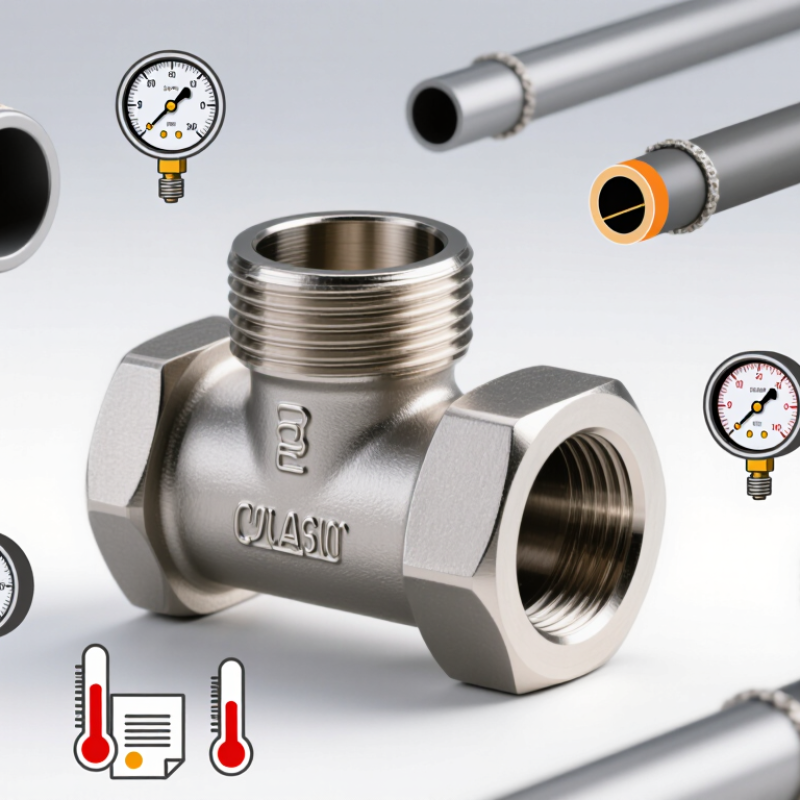
A stainless steel reducing tee connects one smaller branch pipe to a larger main line. It supports flow splitting in water treatment, food processing, chemical service, and industrial plumbing. The fitting usually has three welded or threaded openings. Its reducing outlet helps designers change pipe size without adding another reducer. Grade selection matters. Austenitic stainless steel offers strong corrosion resistance, while higher-alloy options may suit aggressive fluids. Always match the material with temperature, pressure, and fluid chemistry.
In practical installations, check the outside diameter, wall thickness, connection type, and dimensional standard. A tee can look correct but still fail during fitting. I once underestimated clearance around a branch connection. That small mistake made maintenance awkward. Inspectors also review weld quality, surface finish, and traceable test records. For sanitary systems, smooth internal surfaces reduce residue buildup. For outdoor lines, consider moisture, salt exposure, and thermal movement. Do not select by price alone.
Tips: Measure twice. Confirm the branch size. Ask for material certificates and pressure ratings. Inspect sealing faces before installation. Keep the fitting clean and capped during storage. A reliable supplier should explain tolerances and testing clearly. In my experience, field conditions often differ from drawings. Leave room for that possibility.
| Selection Dimension | Verified Technical Data | How to Choose | Typical Applications |
|---|---|---|---|
| Fitting Function | A reducing tee is a three-outlet pipe fitting with two outlets having the same nominal size and one branch outlet having a smaller nominal size. It is commonly identified as an equal-run, reducing-branch fitting. | Confirm which connection is the run and which is the reduced branch. Check the nominal pipe size and outside diameter of every connected pipe. | Branch lines Instrument take-offs Process piping |
| Material Grade | Common stainless steel grades include 304/304L and 316/316L. The “L” grades have lower carbon content and are widely selected for welded systems where improved resistance to weld-related intergranular corrosion is required. | Use 304/304L for many general-purpose water, food, architectural, and process services. Consider 316/316L when chloride exposure, saltwater, or chemical resistance requirements are more demanding. | Water treatment Food processing Chemical service Marine environments |
| Product Standards | ASME B16.9 covers factory-made wrought buttwelding fittings, including dimensional requirements for many stainless steel reducing tees. ASTM A403 covers wrought austenitic stainless steel piping fittings. EN 10253-4 is used for certain austenitic and austenitic-ferritic stainless steel buttwelding fittings. | Specify the governing standard together with the material grade, size, wall thickness, inspection requirements, and certificate requirements. Do not treat a dimensional standard as a complete pressure-design specification. | Industrial piping Pressure systems Fabricated pipelines |
| Connection Type | Buttweld reducing tees are welded directly to pipe ends and are commonly used for permanent process piping. Socket-weld and threaded fittings are manufactured under different dimensional standards and are generally used for smaller-bore piping. | Choose buttweld for clean flow paths, strong permanent joints, and larger process lines. Choose socket-weld or threaded designs only when the piping design and applicable standard permit them. | Buttweld: process lines Socket weld: small-bore systems Threaded: low-to-moderate service |
| Nominal Size Combination | Reducing tees are designated by the run size and branch size, such as 2 in × 2 in × 1 in or DN50 × DN50 × DN25. Actual outside diameters depend on the selected pipe-size system and standard. | Match the tee to the pipe outside diameter and schedule or wall series. Confirm whether the project uses NPS/inch dimensions or DN dimensions before ordering. | Main-to-branch connections Header systems Utility distribution |
| Wall Thickness and Schedule | Pipe schedules such as Sch 10S, Sch 40S, and Sch 80S describe standardized wall-thickness series for stainless steel piping. The fitting wall and end dimensions must be compatible with the connected pipe system. | Never select a tee by nominal size alone. Match the fitting schedule or wall thickness to the piping class and verify the pressure-temperature design basis. | Low-pressure utilities Process piping Higher-pressure services |
| Pressure and Temperature | Allowable pressure depends on material grade, wall thickness, design temperature, corrosion allowance, welding quality, and the applicable piping code. A tee’s nominal size or stainless steel grade alone does not establish its pressure rating. | Provide design pressure, design temperature, fluid, corrosion conditions, and governing code to the engineer or supplier. Confirm the completed piping system rating rather than relying on a generic fitting value. | Steam and hot water Chemical transfer Compressed gases |
| Corrosion Resistance | Stainless steel relies on a chromium-rich passive oxide layer. Chlorides, stagnant conditions, contamination by carbon steel, and certain chemical environments can cause pitting, crevice corrosion, or stress-corrosion cracking. | Evaluate chloride concentration, temperature, cleaning chemicals, flow conditions, and exposure to seawater. Select the grade and surface condition using the complete service environment. | Potable water CIP systems Coastal installations |
| Flow and Branch Geometry | A reducing branch changes flow area and can create local turbulence and pressure loss. The hydraulic effect depends on the run diameter, branch diameter, flow rate, fluid properties, and tee geometry. | Use the reducing tee only when the branch size satisfies the required flow capacity. For critical systems, verify pressure drop, velocity, mixing, and mechanical loads through the piping design calculation. | Cooling-water branches Chemical dosing Sanitary distribution |
| Weldability and Fabrication | 304L and 316L are commonly welded stainless steel grades. Welding procedures should control heat input, shielding, purge quality, interpass conditions, and post-weld cleaning to protect corrosion resistance. | Require qualified welding procedures and suitable filler metal. For sanitary or corrosive service, specify internal purge, pickling/passivation, and surface-finish requirements where applicable. | Pharmaceutical piping Dairy processing Clean utilities |
| Surface Finish | Common stainless steel fitting finishes include mill finish, mechanically polished finish, and hygienic surface finishes. Roughness requirements vary by industry and cleaning method. | Specify the required Ra value, polishing method, internal finish, and passivation requirements when cleanability or product-contact hygiene is important. | Bioprocessing Food and beverage Cosmetics manufacturing |
| Inspection and Documentation | Typical procurement documents may include material test reports, heat or lot traceability, dimensional inspection records, PMI results, and certificates of conformity. Additional non-destructive testing depends on the project specification. | Define documentation before purchase. Check marking, heat number, material grade, dimensions, end preparation, and inspection records against the purchase specification. | Regulated industries Critical process lines Turnaround projects |
| Installation and Maintenance | Stainless steel systems should be protected from carbon-steel particles, chloride-containing cleaners, and crevice-forming contamination. Welded joints should be cleaned and restored according to the project procedure. | Use dedicated stainless steel tools where practical, maintain clean storage, remove heat tint when required, and inspect welds and low points for contamination or corrosion initiation. | New construction Plant maintenance Retrofit projects |
| 2026 Purchasing Checklist | Key order data includes standard, material grade, run size, branch size, schedule or wall thickness, connection type, design pressure, design temperature, fluid, surface finish, inspection level, and required documents. | Use a complete technical datasheet and obtain approval before fabrication. Verify that the tee, pipe, valves, gaskets, and welding procedures are compatible as one piping system. | Engineering procurement Maintenance stock Project specification |