



News
Analysis of Multi-material Elbow Products
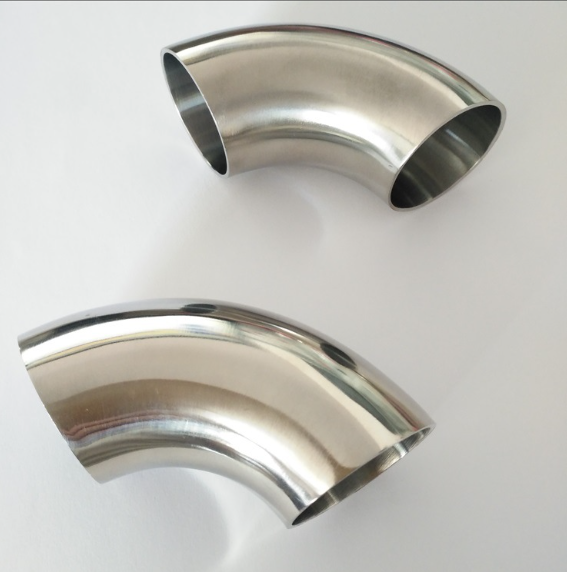
The elbow is a type of pipe fitting used at the turning points of pipelines. Its production processes mainly include the following several methods:
1: Hot extrusion process
Principle: Using a dedicated extrusion machine, the steel pipe is heated to a certain temperature, and then pushed by the mold of the extrusion machine to gradually deform and form a bend.
Advantages: It can produce various specifications and angles of bends, has high production efficiency, stable quality, smooth surface, and high dimensional accuracy.
Disadvantages: Special equipment and molds are required, which incurs a large investment. It is not economical for small batch production.
2: Pressing Process
Principle: The steel plate or steel pipe is cut into the appropriate shape, and then formed by pressing in the mold using a press machine. For some special specifications or materials of elbows, the method of first pressing and then welding can also be adopted.
Advantages: High production efficiency, suitable for mass production, can ensure the dimensional accuracy and surface quality of the elbows, and can also form some complex-shaped elbows well.
Disadvantages: High mold cost, not suitable for small batch production, has certain requirements for the thickness and properties of the material, otherwise problems such as cracking during pressing may occur.
3: Forging Process
Principle: The raw material is heated to a high temperature, and then pressure is applied by the forging equipment to cause the raw material to undergo plastic deformation within the mold, thereby obtaining the shape of the elbow.
Advantages: The forging elbow has a dense structure and good mechanical properties, can withstand high pressure and impact forces, and is suitable for some occasions with high quality requirements, such as high-pressure pipelines, aerospace, etc.
Disadvantages: The production process is complex, requiring multiple steps, low production efficiency, high cost, and high requirements for the technical level of workers.
4: Welding Process
Principle: Multiple pre-processed parts are connected together through welding to form a bend. This process is typically used for the manufacture of large-diameter and thick-walled bends, or for assembling bends on-site.
Advantages: Various specifications and materials of bends can be produced using this process. Especially for some special sizes and shapes of bends, the welding process offers greater flexibility. Additionally, the cost of welded bends is relatively lower.
Disadvantages: The welding quality has a significant impact on the performance of the bend. Strict control of the welding process and quality is necessary to avoid welding defects such as pores and cracks. Moreover, subsequent processes such as heat treatment are required after welding to eliminate welding stress and improve the performance of the bend.
5 Extrusion Process
Principle: Place the heated steel pipe into the extrusion cylinder of the extrusion machine, apply pressure through the extrusion rod, and make the steel pipe extrude into the shape of a bend under the action of the mold.
Advantages: It can produce high-precision and high-quality bends with good surface quality, high dimensional accuracy, and can produce some special shapes and materials of bends.
Disadvantages: The equipment investment is large, the production efficiency is relatively low, the requirements for the mold are high, and it is suitable for the production of some high-end products.