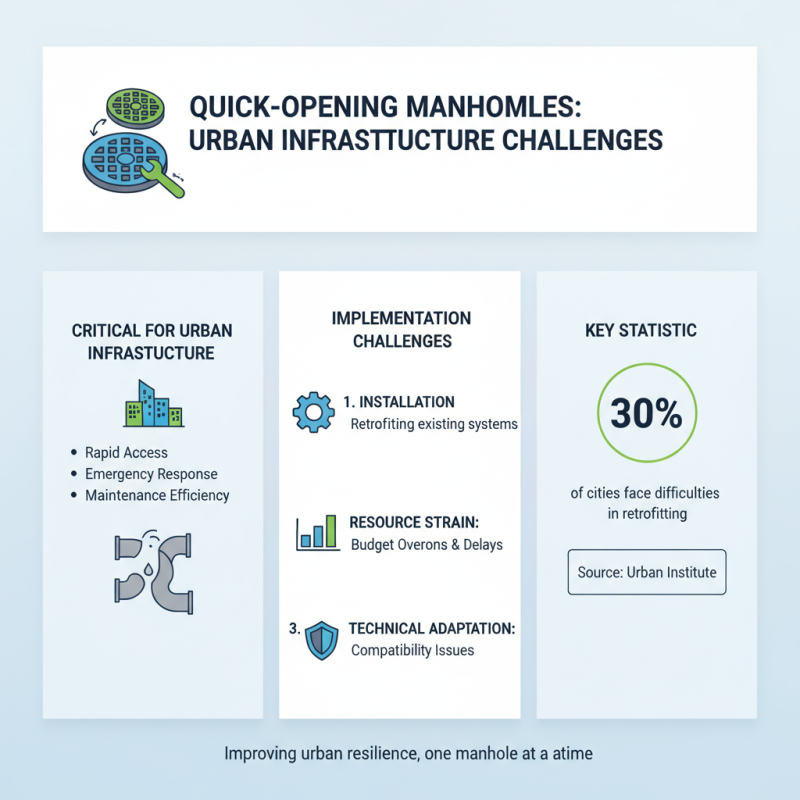
Why Are Quick-Opening Manholes Essential for Urban Infrastructure?
Urban infrastructure relies heavily on efficient maintenance and quick access to underground systems. Quick-Opening Manholes are vital. They allow maintenance crews to respond swiftly to emergencies and perform repairs without delays.
In densely populated areas, delays can lead to significant disruptions. These manholes enable rapid entry, reducing traffic disturbances. Quick-Opening Manholes are designed for speed and safety, but not all meet this need effectively. Some require too much effort or time to open. This can create frustration during critical situations.
The effectiveness of urban infrastructure depends on prompt reactions. Quick-Opening Manholes contribute to keeping cities functioning smoothly. However, design flaws can undermine their effectiveness. Regular assessments and upgrades are necessary. A city’s resilience might depend on these seemingly small structures. Failure to prioritize them can have long-term consequences.

Importance of Quick-Opening Manholes in Modern Urban Design
Quick-opening manholes play a vital role in modern urban design. They provide essential access to subterranean infrastructure. In busy cities, these structures help maintain a balance between accessibility and safety. Emergency responders can often access utilities quickly, reducing response times during critical situations. Urban planners appreciate their efficiency.
These manholes are also crucial for regular maintenance. Heavy machinery isn’t always necessary for repairs. Instead, technicians can use lightweight tools to address issues without causing extensive road disruptions. However, not all manholes are designed with this ease of use in mind. Some remain stubbornly outdated, making maintenance a headache. Cities must continually reassess their infrastructure.
Moreover, quick-opening manholes can enhance drainage systems. In heavy rain, swift access helps prevent flooding. If these structures delay access, streets can become hazardous. Yet, in some urban areas, these designs are simply not standard. Changes are necessary to create safer, more resilient city landscapes. Urban infrastructure should evolve to meet the demands of modern life.
Key Advantages of Quick-Opening Manholes for Utility Access
Quick-opening manholes play a vital role in urban infrastructure. They allow for rapid utility access when emergencies arise. This speed can minimize disruption to city life. In high-traffic areas, the ability to quickly access utilities saves both time and money. Crews can address issues before they escalate.
Consider the safety aspect of quick-opening manholes. By reducing the time technicians spend on the street, they lower the risk of accidents. Timely access translates into fewer traffic disruptions. Quick-opening mechanisms can be designed for easy handling, even at night or in low visibility.
Tip: Always ensure the manhole cover is properly closed after maintenance. This prevents accidents and preserves the integrity of the infrastructure.
Maintenance of quick-opening manholes is crucial yet often overlooked. Even the best designs can fail if neglected. Regular inspections can highlight potential issues. Keeping up with preventative measures can increase their lifespan.
Tip: Consider documenting maintenance checks. This simple step can help track performance over time.
Impact on Emergency Response and Maintenance Efficiency
Quick-opening manholes play a vital role in urban infrastructure. They enhance emergency response capabilities significantly. When seconds count, every moment is crucial. Emergency teams can access vital underground services swiftly. This minimizes delays during water main breaks or gas leaks. Quick-access design reduces risks for both responders and the public.
Tips for urban planners: consider materials that ensure easy operation. Choose designs that prevent dirt accumulation. Regular maintenance is necessary, too. Inspect the mechanism frequently to avoid malfunction during emergencies. Simple checks can save lives.
Urban areas can face challenges from traffic and congestion. Quick-opening manholes help alleviate these issues. They allow for faster repairs and maintenance, reducing service disruptions. However, some designs still require improvement. A potential drawback is the accessibility for non-trained individuals. Ensuring these manholes remain safe is crucial. Encourage awareness of their features among the public to prevent accidents.
Impact of Quick-Opening Manholes on Emergency Response Times
Integration with Smart City Infrastructure Initiatives
Quick-opening manholes play a crucial role in modern urban infrastructure. They facilitate rapid access to underground utilities, which is essential for efficient city management. As cities evolve into smart environments, the integration of these manholes with advanced technologies becomes increasingly important. Sensors can be embedded in the covers to monitor real-time data, aiding in maintenance and safety.
Cities often face challenges when integrating smart initiatives. Coordination between various city departments can be tedious. For instance, a malfunctioning manhole can obstruct traffic and create hazards. Delays in response times can lead to public frustration. Ensuring that manholes open quickly and efficiently minimizes these issues. Yet, there remain concerns about the long-term sustainability of these solutions.
The installation of quick-opening manholes should be approached with careful consideration. While technology offers solutions, it also demands regular updates and maintenance. Communities must evaluate their current infrastructure and explore how this technology fits within their larger visions. Creating an integrated urban space is not just about speed; it’s about enhancing quality of life in an increasingly complex landscape.
Why Are Quick-Opening Manholes Essential for Urban Infrastructure? - Integration with Smart City Infrastructure Initiatives
| Dimension |
Description |
Importance |
Integration with Smart City |
| Access Speed |
Quick-opening design facilitates rapid access for maintenance |
Reduces downtime for street repairs and utilities |
Essential for timely responses in smart city operations |
| Safety Features |
Designed to minimize hazards during opening |
Protects workers and pedestrians |
Enhances operational safety in automated environments |
| Material Durability |
Constructed from weather-resistant materials |
Long lifespan reduces replacement needs |
Aligns with sustainable infrastructure goals |
| Design Versatility |
Customizable for various urban applications |
Fits different urban layouts and service needs |
Aids in integrating diverse city services |
| Smart Monitoring |
Equipped with sensors for real-time data collection |
Improves city management and resource allocation |
Key component of smart city data networks |
Challenges and Considerations in Quick-Opening Manhole Implementation
Quick-opening manholes are critical for urban infrastructure. However, implementing them involves several challenges that need careful consideration. One major issue is the complexity of installation. According to the Urban Institute, nearly 30% of cities face difficulties in retrofitting existing systems to accommodate these manholes. The need for additional resources can strain budgets, leading to delays.
Another challenge revolves around safety. Quick-opening manholes can pose risks during maintenance. A study by the American Public Works Association highlights that 10% of maintenance workers report safety concerns with traditional manhole designs. The speed of access might increase risk if not properly addressed. Adequate training for personnel is essential to mitigate these risks.
Additionally, urban planners must consider environmental impacts. Quick-opening designs may disrupt local ecosystems. The Department of Urban Affairs noted that more than 20% of urban areas experience water runoff issues. Implementing better designs can help, but there is still much to learn about their environmental implications. Balancing efficiency with ecological responsibility remains a significant challenge in urban planning.