
China’s pipe-fitting sector draws on a substantial steelmaking base, but raw-material scale alone does not identify a dependable supplier. The World Steel Association’s World Steel in Figures 2025 reports that China produced about 1,005 million tonnes of crude steel in 2024, out of roughly 1,883 million tonnes worldwide. These figures provide useful context, not proof of elbow quality. A 90°Socket Elbow must still meet the buyer’s material, pressure, dimensional, and service requirements.
This guide examines Chinese manufacturers through practical evidence: product range, material certificates, machining and welding controls, inspection records, and export experience. For socket-weld fittings, buyers should confirm applicable specifications, such as ASME B16.11 where required, and check dimensions, pressure class, and material grade against the project documents. Ask how each batch is identified and whether inspection reports can be matched to the delivered parts. Small details matter. A clean-looking fitting does not reveal its full production history.
“Top” should mean more than a polished catalogue or a low quotation. Manufacturer information can be incomplete, and this comparison cannot replace an independent factory audit or sample inspection. That limitation deserves attention. The following overview is intended to help engineers, distributors, and procurement teams compare suppliers more carefully, verify claims, and shortlist manufacturers whose capabilities fit the actual application.
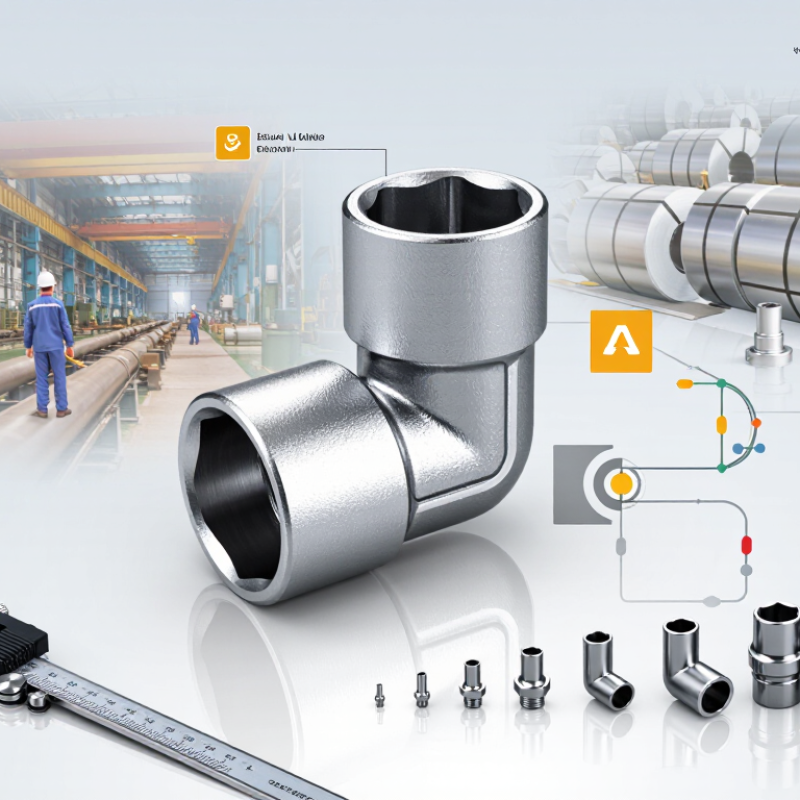
A 90° socket elbow turns a pipe run through a right angle, often where space is tight. The pipe end slips into a recessed socket and rests against an internal shoulder. A fillet weld around the outside secures the joint. This compact connection is common in small-bore process lines, instrument piping, and utility systems. The shoulder helps position the pipe, but fit-up still matters.
ASME B16.11 lists socket-weld fitting classes 3000, 6000, and 9000. These class numbers are not direct working-pressure values; allowable pressure also depends on material, temperature, and the piping design. For flow, the elbow redirects fluid and creates turbulence and pressure loss. Technical Paper 410’s fitting-loss tables show why engineers use loss coefficients rather than assuming every elbow has identical resistance. Geometry and flow conditions matter. A small bore mismatch can matter, too. That detail is easy to miss. Designers should check dimensions, weld procedure, and service conditions against the applicable project requirements before installation.
A 90° socket-weld elbow turns a pipe run sharply while keeping the joint compact. Material selection should match the fluid, temperature, pressure, and corrosion exposure. ASTM A105 is commonly specified for forged carbon-steel fittings; ASTM A182 covers forged alloy and stainless-steel grades. Stainless steel is not automatically the safer choice. Grade compatibility matters.
ASME B16.11 specifies dimensions and pressure classes for forged socket-weld and threaded fittings. Check the material specification, fitting class, pipe schedule, and project requirements together. The class alone does not establish allowable system pressure.
Common socket-elbow types include 90° and 45° turns, in several pressure classes and material grades. A 90° elbow suits a tight directional change; a 45° fitting creates a gentler route.
Small details matter. During installation, confirm socket depth, alignment, and the required weld preparation against the applicable procedure. A catalog listing may omit these details, so buyers should verify them before ordering. One caveat: a standard fitting description cannot replace engineering review of the actual service conditions.
When evaluating 90° socket elbow manufacturers in China, start with the documents behind the product. Ask for material certificates, heat numbers, dimensional inspection records, and pressure-test procedures. Then check whether the socket dimensions match the specified standard, such as ASME B16.11. A clean-looking fitting can still have an inconsistent bore or poorly finished socket. Details matter.
Manufacturing controls deserve close attention. Request recent inspection records, not only a sample certificate prepared for a sales inquiry. Check how the factory verifies wall thickness, socket depth, thread quality, and surface defects. Ask how nonconforming parts are identified and separated.
That figure is not specific to elbows, but it shows why material selection and traceability should not be treated as paperwork. Compare suppliers using the same drawing, material grade, and inspection requirements. Review production capacity and lead-time records against your actual order size. If possible, inspect a finished elbow: look for sharp burrs, uneven edges, and clear heat identification. A factory visit can help, though one polished sample proves little. I would also ask for test results from routine production batches. Small gaps in records are easy to overlook—and worth questioning.
Leading 90° socket elbow manufacturers in China are best judged by production control, not catalog size. A capable factory should state its material grades, dimensional tolerances, pressure range, and applicable testing methods. Ask for a current drawing and confirm the socket depth, bore, and outside diameter. Small differences can complicate installation, especially when elbows must align with existing pipework.
Look for documented inspection at incoming material, machining, and final packing. Sample checks should cover dimensions, surface condition, and marking; certificates should match the supplied batch. Details matter. A clean finish is useful, but it cannot prove consistent wall thickness or fit. Request sample pieces and compare them with the drawing using basic measuring tools. Paperwork can look convincing. It is not the fitting. Also discuss packaging, lead time, and how production changes are communicated. A supplier may meet the drawing yet still need clearer feedback on a detail. That is worth resolving before a large order.
Use the standards-based benchmarks below to compare suppliers. This is a selection framework, not a verified ranking of individual manufacturers.
| Evaluation Dimension | Relevant Benchmark or Fact | What to Verify with the Supplier |
|---|---|---|
| Product standard | ASME B16.11 covers forged socket-welding and threaded fittings, including dimensions, tolerances, ratings, materials, and marking. | Request the applicable standard and edition, dimensional drawings, and inspection records. |
| Pressure class | ASME B16.11 socket-welding fittings include Classes 3000, 6000, and 9000. Class availability depends on fitting type and size. | Confirm the class for the exact nominal pipe size and check compatibility with the project piping specification. |
| Carbon-steel material | ASTM A105 is a specification for carbon-steel forgings used in piping components. | Check the material test certificate, heat number traceability, and product marking. |
| Stainless-steel material | ASTM A182 covers forged or rolled alloy and stainless-steel piping components; F304 and F316 are commonly specified grades within this standard. | Verify the specified grade, chemical composition, mechanical test results, and heat-number traceability. |
| Alloy-steel material | ASTM A182 includes alloy-steel grades such as F11 and F22 for applicable piping components. | Confirm grade-specific heat treatment and testing requirements against the purchase specification. |
| Dimensions and fit-up | Socket-welding elbow dimensions depend on the applicable standard, fitting size, and pressure class; dimensions should not be assumed interchangeable across classes. | Compare controlled drawings and measured samples with the project’s specified standard and tolerances. |
| Quality documentation | Inspection documents can include material certificates, dimensional inspection reports, and traceability records; required documents depend on the contract. | Define required document type, inspection scope, and acceptance criteria before placing an order. |
| Supplier qualification | A quality-management certificate alone does not establish that a specific fitting complies with its product standard or purchase specification. | Assess production controls, inspection capability, traceability, sample conformity, and relevant audit evidence. |
A 90° socket elbow changes flow direction in compact piping layouts, especially where threaded joints may be unsuitable. Socket-weld ends accept pipe insertion before welding, making the fitting useful in selected steam, chemical, hydraulic, and utility lines. Fit matters. Buyers should match the elbow’s material, bore, schedule, and pressure-temperature rating to the pipe and service conditions. A stainless elbow may resist corrosion, but the wrong grade can still fail in a specific fluid or temperature range. Check the operating details, not just the product photo.
When comparing manufacturers in China, request dimension drawings, material certificates, applicable production standards, and clear pressure ratings. Confirm whether dimensions and tolerances match your project specifications. Ask how batches are identified and how material is inspected before shipment. A pre-production sample can reveal socket depth, surface finish, and packaging quality. It is not a complete quality guarantee, though. For critical installations, consider independent inspection and verify that the supplied documents match the actual batch. Lead time, minimum order quantity, and protective packaging also affect sourcing; small details can become costly after delivery.