Why Choose Tank Top Manholes for Storage Tanks?
Tank Top Manholes are more than simple openings in a storage tank roof. They create a controlled access point for inspection, cleaning, ventilation, and maintenance. Their position can reduce the need for workers to enter confined internal spaces frequently. That matters when a tank stores water, chemicals, oils, or other regulated materials.
Phil Myers, a recognized aboveground storage tank specialist, explains, “Inspection access is tank protection.” This practical view reflects field experience. A properly designed manhole lets inspectors examine roof plates, welds, coatings, and internal fittings with better visibility. It can also support safer maintenance planning when combined with suitable platforms, ladders, covers, gaskets, and lifting equipment. The details matter.
Good design is not automatic.
Tank Top Manholes must match the tank diameter, roof structure, service temperature, stored product, and inspection requirements. Engineers should review load distribution, nozzle reinforcement, corrosion allowance, sealing performance, and safe access arrangements. Applicable standards, such as API 650 and API 653, may guide design and inspection decisions, but project conditions still require professional judgment. Local requirements must also be checked.
There is no universal “best” manhole. A large opening improves access, yet it may increase roof reinforcement needs and installation cost. A smaller opening saves space, but it can restrict tools and inspection visibility. That trade-off deserves honest evaluation. In real projects, small design assumptions can become expensive problems later. Choosing Tank Top Manholes wisely means balancing access, structural integrity, worker safety, maintenance efficiency, and long-term reliability.
What Is a Tank Top Manhole?
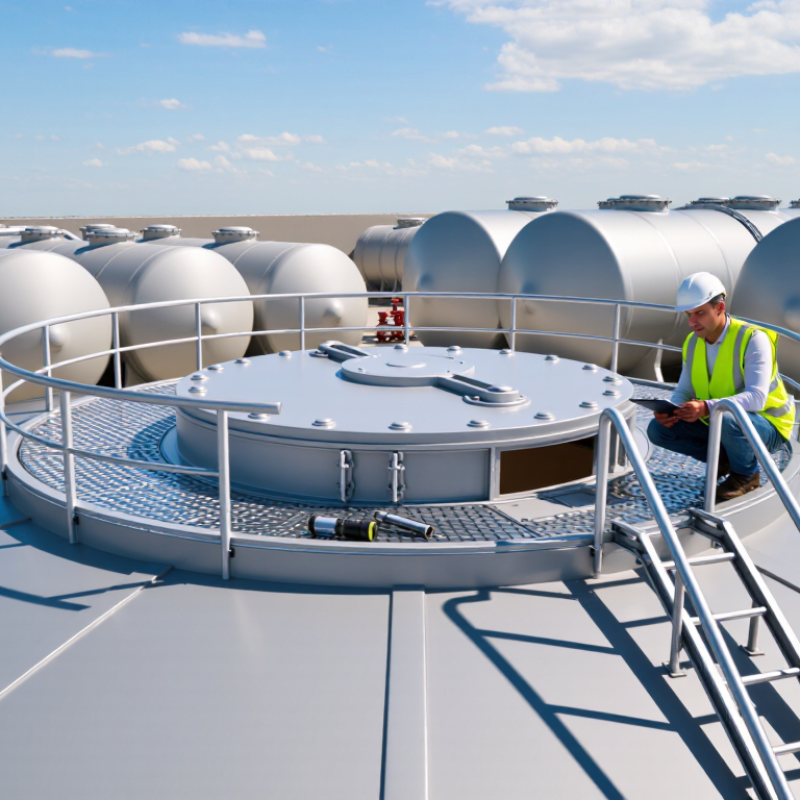
A tank top manhole is a framed opening in a storage tank’s roof or top plate. It provides access for inspection, cleaning, maintenance, and equipment checks. A bolted or hinged cover closes the opening, while a raised neck can help keep rainwater away from the joint. The exact arrangement depends on the tank design, roof type, stored material, and maintenance needs. API Standard 650 addresses manholes and other openings in welded storage tanks, including requirements relevant to their construction and placement. The opening is practical, but it is not a safety system by itself.
Its position matters. Workers may need to reach it by a fixed ladder or platform, and the cover can be heavy or awkward to handle. NIOSH’s 1986 report, NIOSH Alert 86-110, documented 585 confined-space deaths in the United States from 1980 through 1984—about 117 per year. Those figures cover many types of confined spaces, not tank-top manholes alone. Still, they underline why access planning must include atmospheric testing, fall protection, and a controlled entry procedure. A clear opening helps. It does not make entry safe. In practice, even a well-designed manhole can become difficult to use when coatings corrode, bolts seize, or nearby piping blocks access.
How Does a Tank Top Manhole Provide Access?
How Does a Tank Top Manhole Provide Access?
A tank top manhole creates a direct opening into the vessel for inspection, cleaning, and maintenance. Its cover is secured to a raised neck or flange, forming a clear boundary around the opening. When the tank is out of service and safely prepared, technicians can remove the fasteners and lift the cover. The opening’s diameter matters: it must suit the work planned, not just look convenient on a drawing.
On a real tank, access can mean checking interior welds, removing residue, or positioning inspection equipment. A hinged cover may be easier to handle, while a bolted cover can provide a firm, repeatable seal. Gaskets, bolt condition, and the mating surfaces all affect that seal. Small defects count. A gasket pinched during installation can compromise performance, even when the cover appears firmly closed.
Placement also shapes how useful the manhole is. A top opening should allow safe approach and enough clearance for tools, lifting gear, and the technician’s movements. Guardrails or other fall-protection measures may be needed around elevated access points. The tank must be isolated and assessed before anyone enters; a manhole alone does not make entry safe. This detail is easy to underestimate. Selecting the opening size and location with maintenance teams involved can prevent awkward, costly work later.
What Benefits Do Tank Top Manholes Offer?
Tank top manholes provide direct access to the upper interior of a storage tank. This can make inspections, cleaning, and maintenance more practical. A technician can reach the roof area without removing large sections of equipment. That matters when checking coatings, internal fittings, or signs of moisture and corrosion. A well-sized opening also helps tools and inspection lights pass through with less awkward handling. Small details count.
A top-mounted opening can preserve access when side space is limited or connected piping makes a side entry inconvenient. Its raised neck and fitted cover can help manage rainwater, while a suitable gasket supports a tighter seal. The right design depends on tank contents, roof structure, operating pressure, and the tasks people need to perform. Material and cover weight matter, too. No manhole is a complete safety solution; entry procedures and isolation still require careful planning. There is a trade-off: cutting an opening can affect roof strength, so reinforcement and competent design review should not be treated as optional. A top manhole may look simple, but its dimensions, location, and sealing details deserve close attention.
Why Choose Tank Top Manholes for Storage Tanks? — What Benefits Do Tank Top Manholes Offer?
Key considerations and practical benefits of locating a manhole on the tank roof.
| Dimension |
Potential Benefit |
Practical Consideration |
| Access from above |
Provides an access point through the tank roof for inspection, maintenance, or other work when the tank is safely isolated and prepared. |
Access procedures should follow the tank design, site rules, and applicable confined-space requirements. |
| Ground-level clearance |
Can avoid the need for a large side opening at ground level, which may be useful where nearby piping, equipment, or walkways limit side access. |
Confirm that roof access is reachable and that the opening does not conflict with roof framing or other fittings. |
| Inspection planning |
Can provide a convenient location for personnel or inspection equipment to enter from the roof, depending on the tank layout and opening size. |
Opening dimensions and internal obstructions affect what equipment or inspection methods can be used. |
| Sealing and weather exposure |
A properly selected cover and gasket can help limit water or debris entry while the manhole is closed. |
Roof openings are exposed to weather; sealing materials, fasteners, and cover design should suit the service conditions. |
| Tank integrity |
A purpose-designed manhole can provide a defined access opening while maintaining the tank’s intended construction. |
Roof reinforcement, pressure or vacuum conditions, and applicable design codes must be evaluated by qualified personnel. |
| Operations and safety |
Can make access points easier to identify and include in maintenance and inspection plans. |
Roof access introduces fall hazards. Use suitable access systems, fall protection, isolation, and entry controls as required. |
| Best-fit applications |
May suit tanks where roof access is practical and the required inspection or maintenance tasks can be performed through a top opening. |
A top manhole is not automatically preferable; tank geometry, contents, access frequency, and site conditions should guide selection. |
Which Design Factors Should Be Considered?
Why Choose Tank Top Manholes for Storage Tanks?
Tank top manholes provide direct access for inspection, cleaning, and maintenance. Their location also keeps the tank shell less crowded. Design decisions, however, determine whether access remains safe and practical.
Start with the opening size. It must allow workers, tools, and removable internal parts to pass through comfortably. A narrow opening may reduce cost, but it can complicate cleaning later. Consider the cover’s weight, lifting method, and swing clearance. Hinged covers need enough space around vents, pipes, ladders, and platforms.
Pressure rating requires careful attention. A tank top manhole should match the tank’s operating pressure, vacuum conditions, and temperature range. The cover, neck, bolts, gasket, and reinforcement must work as one system. Ignoring local shell stress can create deformation around the opening. That mistake is expensive.
Material compatibility matters too. Stainless steel, coated carbon steel, and specialty alloys behave differently with stored liquids. Check corrosion resistance, gasket compatibility, and cleaning chemicals before selecting materials. Use a gasket that suits the process temperature and fluid. It should seal evenly without excessive bolt force. Field inspections often reveal uneven compression caused by poor flange alignment.
Drainage deserves practical thought. Water trapped around the cover can accelerate corrosion. Sloped surfaces and protected fasteners help reduce this problem. Safety features also matter, including guardrails, non-slip platforms, and controlled opening procedures. Applicable pressure-vessel, workplace-safety, and sanitary standards should guide the final design. A small oversight during drafting may become a daily maintenance problem.
Why choose a tank-top manhole? It provides access through the roof for inspection and maintenance. Opening size is one design factor: a larger clear opening provides more geometric access area, but must be balanced against roof strength, reinforcement, sealing, venting, and applicable codes. Areas shown are calculated from nominal circular diameters (π × diameter² ÷ 4); they are not code requirements or guaranteed clear dimensions.
Where Are Tank Top Manholes Commonly Used?
Where Are Tank Top Manholes Commonly Used?
Tank top manholes are common on vertical storage tanks with fixed roofs. Operators use them to inspect the interior, clean surfaces, and reach equipment mounted inside. You may find them on water storage tanks, agricultural tanks, and industrial vessels holding process liquids. They are also used on some food-processing tanks, where smooth, accessible surfaces can support routine cleaning.
They suit sites where workers need access from above and where the tank’s layout allows safe roof access. A manhole near a mixer, pipe, or internal fitting can make inspection more practical. Placement matters. A poorly positioned opening may leave areas difficult to reach, even when the opening itself is large. That detail is easy to overlook.
Tank contents and operating conditions influence the opening’s material, cover, and sealing arrangement. For example, a tank exposed to weather may need a cover designed to limit water entry. Tanks with specific hygiene or corrosion concerns may require different materials and seals. Access also needs careful planning: roof height, walkways, and fall protection affect whether the manhole is useful in practice. It depends. A tank may have a top manhole, yet still require other access points for thorough inspection.